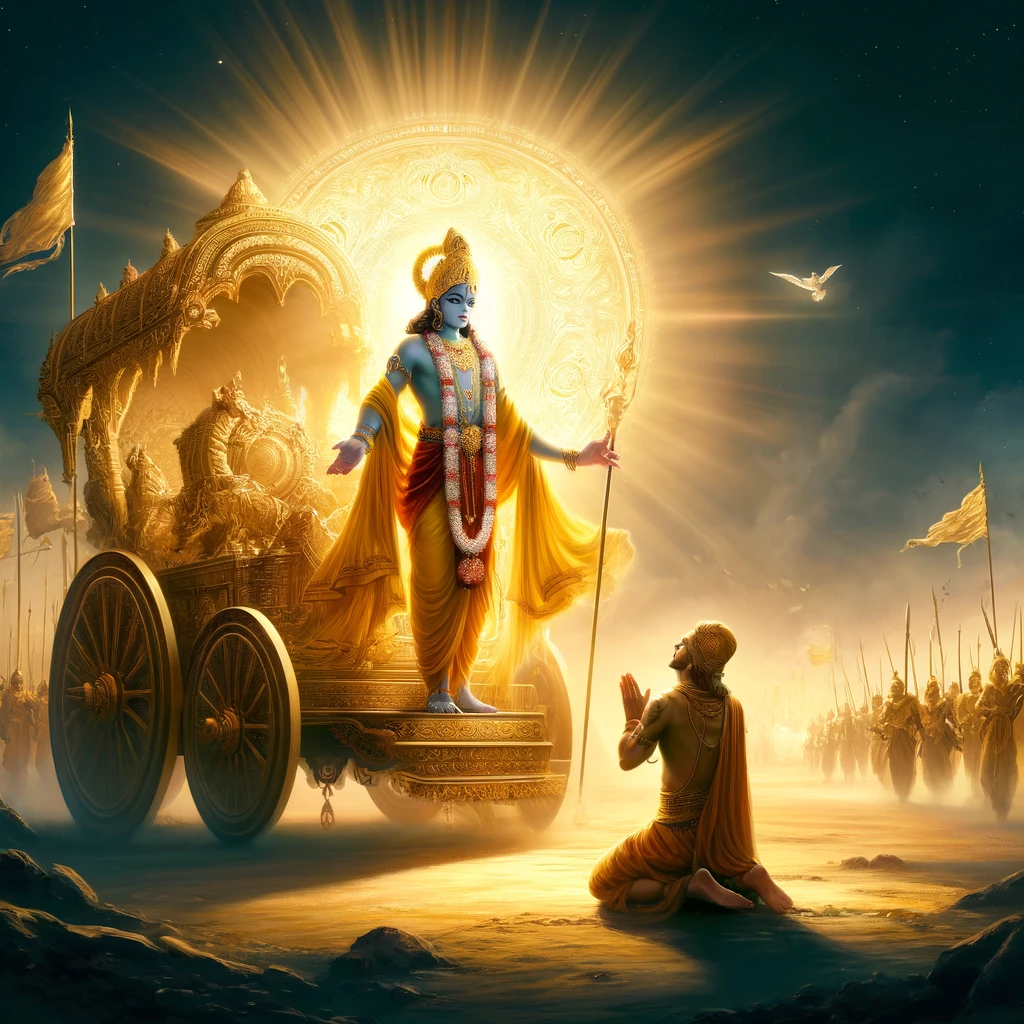
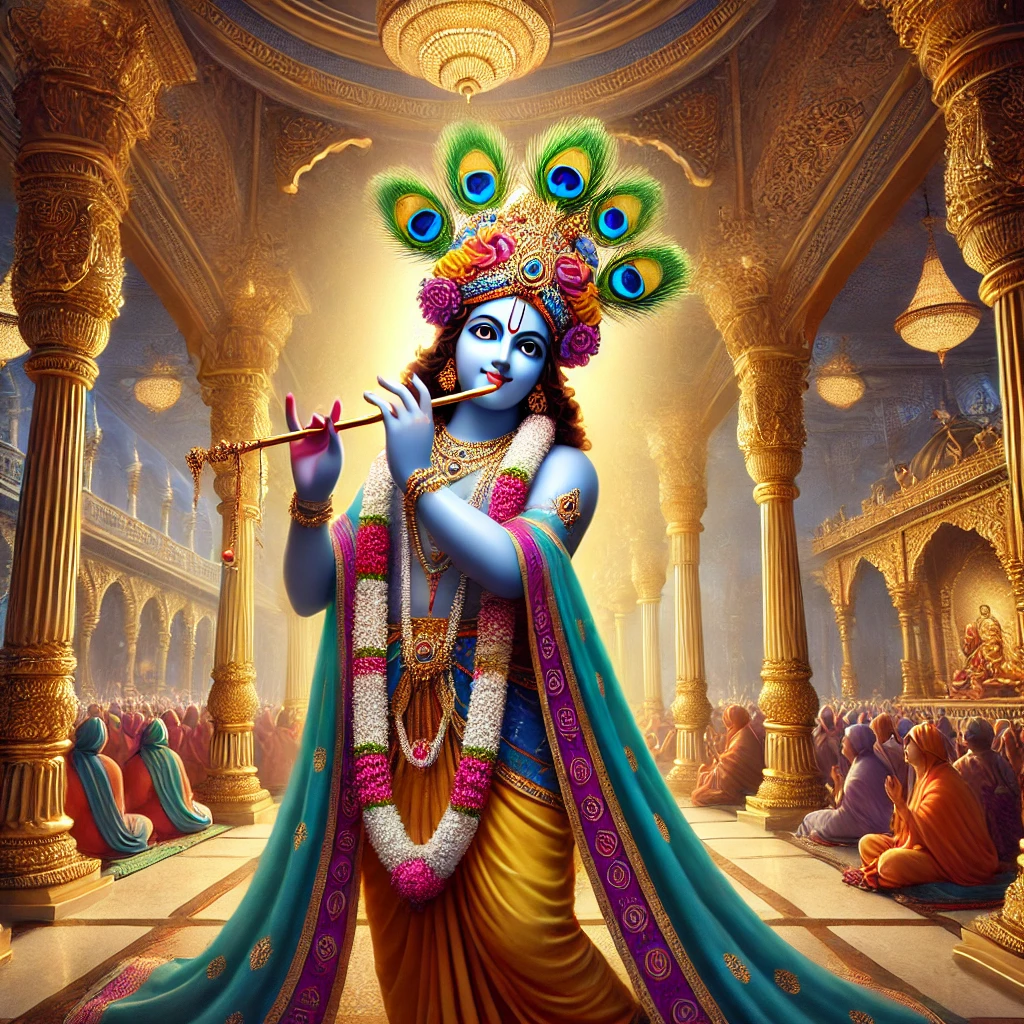

In today’s world, where stress, distraction, and restlessness have become everyday companions, millions of Indians are turning inward, seeking a practice that is both ancient and immediately effective. The answer, preserved in our own Vedic tradition for thousands of years, is the chanting of the Maha Mantra: Hare Krishna Hare Krishna, Krishna Krishna Hare Hare, Hare Rama Hare Rama, Rama Rama Hare Hare.
This is not simply a religious recitation. It is a living, breathing spiritual practice that purifies the mind, calms the heart, and awakens the soul’s deepest longing for connection with the Supreme.
What Is the Hare Krishna Hare Krishna Mantra?
The phrase “Hare Krishna Hare Krishna” is the opening of what Vedic scriptures call the Maha Mantra, where “Maha” means great and “mantra” means a sacred sound that liberates the mind from ignorance. Together, it becomes the Great Chant for Deliverance, a spiritual vibration specifically recommended for the present age known as Kali-yuga, an era marked by confusion, anxiety, and spiritual disconnection.
The Kali-Santarana Upanishad, one of the ancient Vedic texts, explicitly names these sixteen sacred words as the most powerful method for achieving spiritual liberation in this age. This is not folklore or belief alone. It is an authorized, scriptural prescription passed down through an unbroken lineage of spiritual masters across centuries.
The Full Maha Mantra
The complete Hare Krishna Maha Mantra consists of sixteen names arranged in eight pairs:
Hare Krishna, Hare Krishna, Krishna Krishna, Hare Hare Hare Rama, Hare Rama, Rama Rama, Hare Hare
A simple guide to pronunciation for new chanters:
Hare (Ha-ray): Rhymes with “play” Krishna (Krish-na): The ‘i’ is short, as in “sit” Rama (Raa-ma): The ‘a’ is long, as in “father”
The practice is straightforward: chant clearly, hear the sound attentively, and allow the vibration to settle into your consciousness. No special training, no prior initiation, and no specific religious background is required. Anyone, at any time, in any place, can begin chanting today.
The Meaning Behind Each Sacred Name
Every word in this mantra carries profound spiritual meaning. This is not a collection of arbitrary syllables. It is a heartfelt prayer addressed directly to the Supreme.
Hare is the vocative form of “Hara,” referring to the divine energy of the Lord, specifically Srimati Radharani. When we say “Hare,” we are calling upon the Lord’s own spiritual potency to engage us in devotional service.
Krishna means “the all-attractive one,” the Supreme Personality of Godhead, the source of all existence, beauty, and bliss. He is not simply a deity of a particular community. The scriptures describe Him as the origin of all creation.
Rama means “the reservoir of all transcendental pleasure.” This name evokes the Supreme Lord as the eternal source of joy, peace, and fulfillment.
When we chant Hare Krishna Hare Krishna, we are making a sincere appeal: “O energy of the Lord, O all-attractive Lord, O source of all pleasure, please engage me in Your loving service.” This prayer, repeated with sincerity, becomes the foundation of an entire inner life.
Ancient Roots, Global Reach
The practice of chanting the holy names is among the oldest and most continuously practiced spiritual disciplines in the world. Its scriptural authority rests in texts like the Kali-Santarana Upanishad, the Caitanya-caritamrta, and various Puranas.
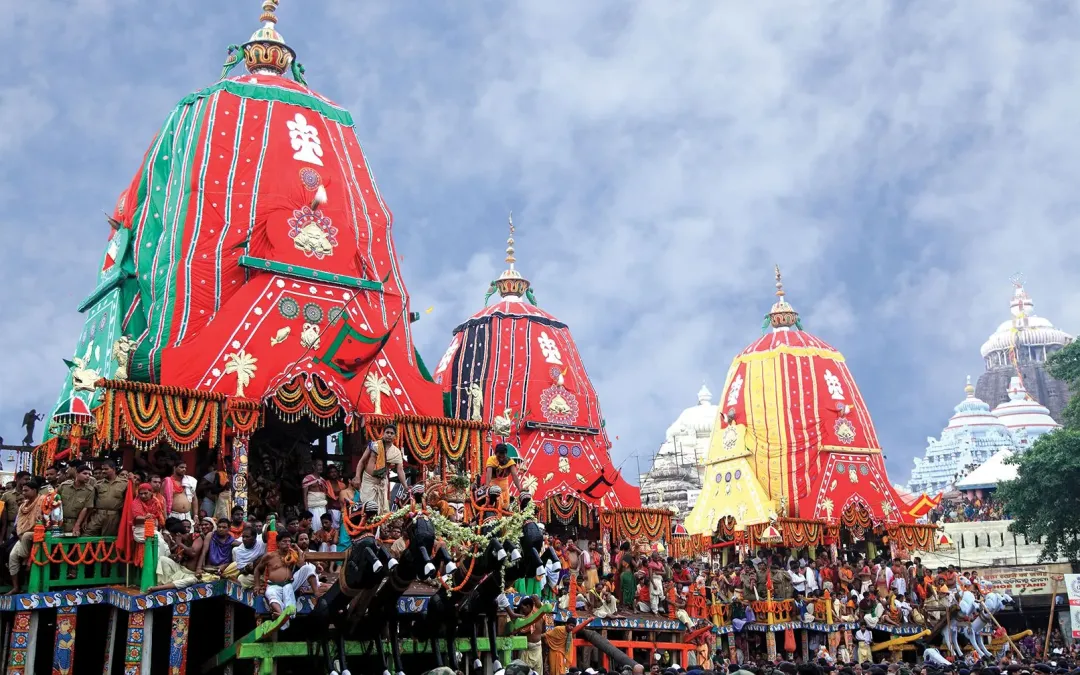
More than 500 years ago, Lord Caitanya Mahaprabhu, revered in the Vaishnava tradition as Krishna Himself appearing in the mood of a devotee, inaugurated the sankirtana movement, the congregational chanting of God’s holy names. He took this practice from the temples and into the streets, making it accessible to all people regardless of caste, gender, or background. His instruction was simple: chant, hear, and share the holy names.
In 1965, His Divine Grace A.C. Bhaktivedanta Swami Prabhupada carried this tradition westward. He brought the Hare Krishna movement to New York and introduced it to the Western world, and today millions of people around the globe have benefited from meditation and the transformative power of chanting. His foundational text, the Bhagavad-gita As It Is, remains one of the most widely read spiritual books on the planet.
ISKCON Hare Krishna Dham, Whitefield, Bangalore is spiritually mentored by ISKCON Whitefield, in accordance with the desire of His Divine Grace A.C. Bhaktivedanta Swami Srila Prabhupada, Founder-Acharya of the worldwide Hare Krishna Movement. This lineage is not merely institutional. It is spiritual and unbroken, stretching from the ancient texts to the present day.
What Happens When You Chant: The Real Benefits
Many people come to chanting initially through curiosity or a desire to manage stress. What they discover often goes far deeper than expected.
Mental Peace: The repetitive, rhythmic quality of the mantra acts as a natural anchor for a restless mind. Regular chanters report significant reductions in anxiety and mental turbulence, not as a side effect, but as a natural consequence of the purification taking place at a deeper level.
Emotional Cleansing: The Vedic texts describe how the heart accumulates layers of conditioning over time, driven by lust, anger, greed, and pride. Chanting, practiced sincerely over time, works like a gentle but consistent process of inner cleansing, gradually dissolving these layers.
Spiritual Awakening: As the conditioning clears, something begins to emerge from beneath. The scriptures describe it as our original nature: eternal, full of knowledge, and full of bliss (sat-chit-ananda). This is not a state to be manufactured. It is one that returns as the obstacles are removed.
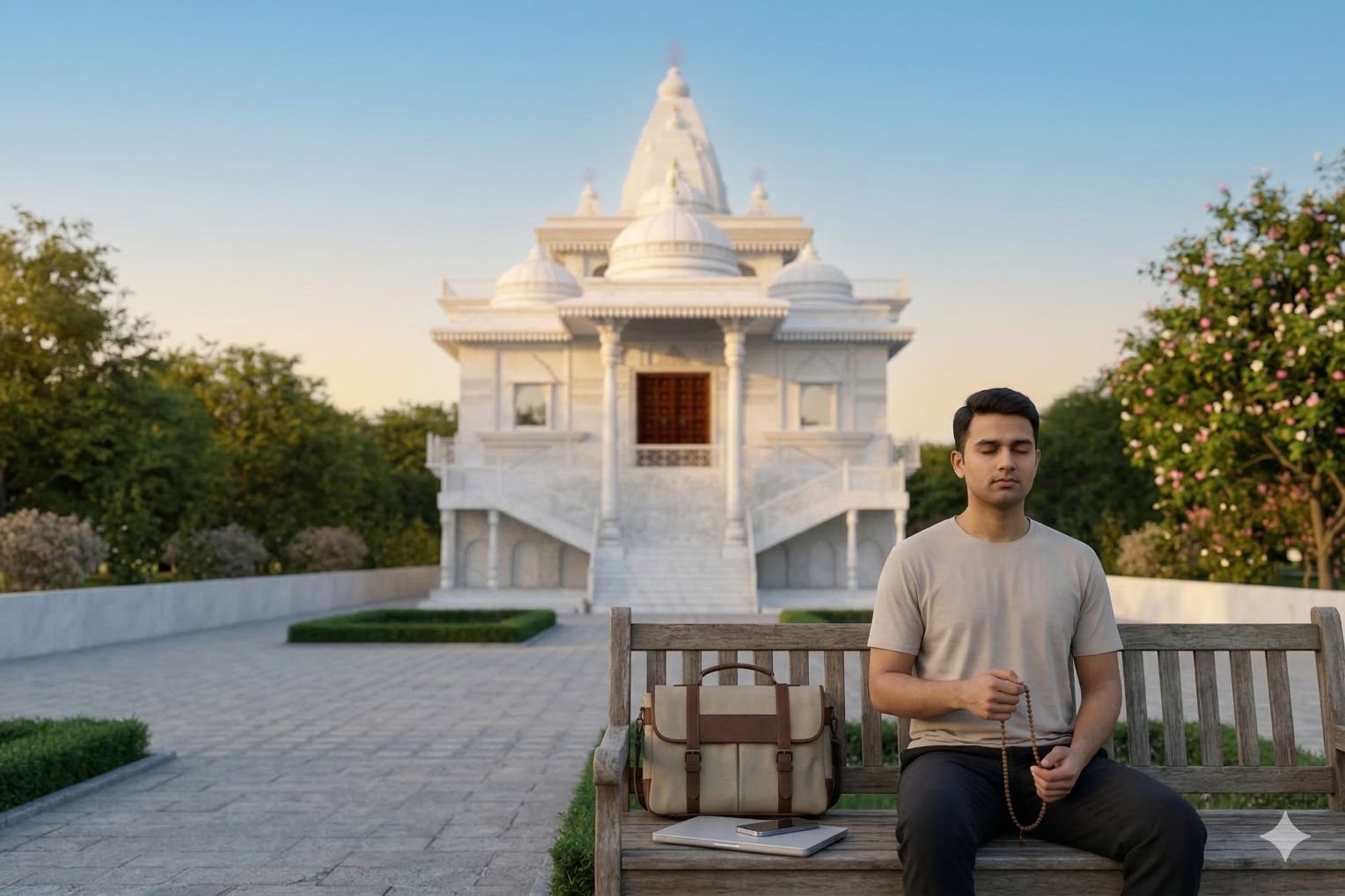
A Daily Anchor: In a culture increasingly dominated by screens, noise, and speed, the simple act of sitting with beads and chanting the Maha Mantra becomes one of the most grounding practices available. It requires nothing but your voice and your attention.
The classic analogy used in the scriptures is that of a dusty mirror. The mirror itself is inherently reflective. The dust is the accumulated conditioning of material life. Chanting is the act of wiping away that dust, and what is revealed beneath is the brilliant, luminous self that was always there. Practices like observing Ekadashi, the auspicious fasting day of the Vaishnava calendar, complement and deepen this process of purification.
Two Ways to Chant: Japa and Kirtan
There are two primary modes of chanting practiced and taught in the tradition, each with its own quality of experience.
Japa: Personal Meditation
Japa is the quiet, intimate practice of chanting the mantra one-to-one with your own consciousness. Devotees traditionally use a Japa Mala, a string of 108 prayer beads, to keep count.
Here is how to begin:
Hold the beads in your right hand, between the thumb and middle finger. Starting from the bead beside the large “Krishna bead,” chant the full Maha Mantra once per bead. Work through all 108 beads. This completes one “round” of Japa. Most serious practitioners aim for sixteen rounds daily, though even one round carried out with sincerity and attention is deeply beneficial.
The key in Japa is to hear yourself chanting. The mind tends to wander. When it does, gently return your attention to the sound. This is the practice: not the prevention of distraction, but the returning.
Kirtan: Congregational Chanting
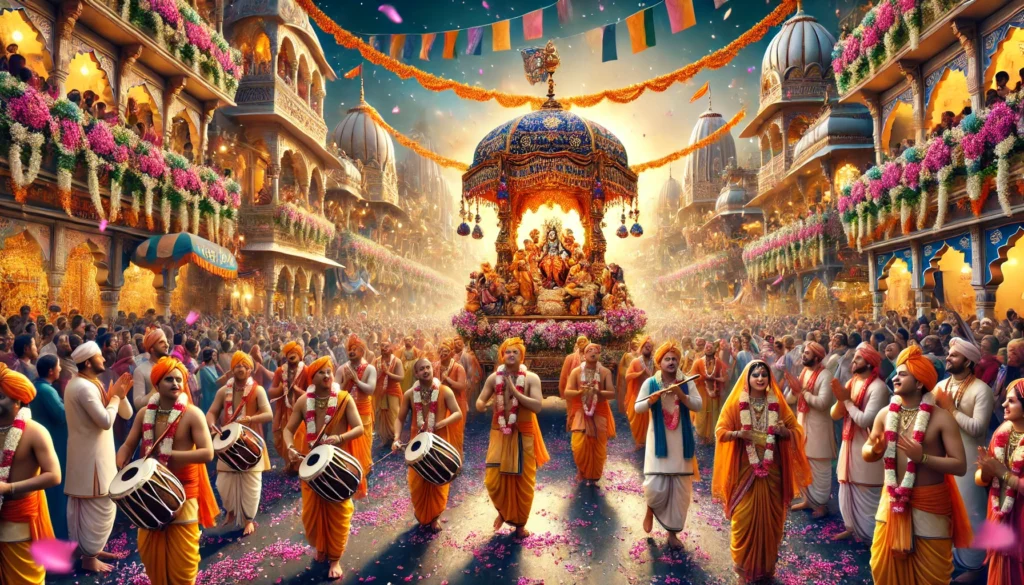
If Japa is a personal conversation with the divine, Kirtan is a celebration. Kirtan involves singing the Maha Mantra aloud, often accompanied by the mridanga drum and kartals (hand cymbals), in a group setting.
There is an energy unique to collective chanting that is difficult to describe and impossible to fully anticipate until experienced. The voices, the rhythm, the devotional atmosphere, and the shared intention create a spiritual environment that can move even the most skeptical first-time visitor.
Kirtan is also the most accessible entry point for someone new to the practice. You do not need to know the melody. You do not need to read Sanskrit. You simply show up, listen, and gradually let your voice join in.
Chanting as a Path: The Stages of Progress
The Vaishnava tradition describes the inner journey of a sincere chanter in clear, recognizable stages:
Shraddha (Faith): The journey begins with an openness, a curiosity, or a genuine desire to know something beyond the material. This initial faith is the seed.
Sadhu-sanga (Association with Devotees): The seed grows fastest in good soil. When a seeker begins to associate with sincere practitioners, the practice deepens naturally through inspiration, guidance, and shared energy.
Bhajana-kriya (Regular Practice): The seeker commits to a regulated practice, chanting daily, attending programs, and engaging with the scriptures. Consistency here is more important than intensity.
Anartha-nivritti (Cleansing of Unwanted Elements): Over time, and often imperceptibly at first, the practitioner notices that old habits, reactive patterns, and material anxieties begin to loosen their grip. This is the cleansing stage, one of the most encouraging signs that the practice is working.
Each stage is a preparation for the next, and each is supported by the community, the scriptures, and the practice itself.
ISKCON Whitefield: A Spiritual Home in Bangalore East
ISKCON Whitefield is part of the renowned global ISKCON Global Organization. The upcoming ISKCON Global Temple in Bangalore is currently under construction and is expected to welcome large numbers of devotees from February 2027. In the meantime, ISKCON Whitefield brings the same spiritual energy, wisdom of the Bhagavad-gita, and joy of bhakti-yoga right to your neighborhood.
The center is dedicated to fostering a deep sense of Krishna consciousness among the residents of Whitefield and its surrounding areas, including Brooke Field, KR Puram, Mahadevapura, Varthur, Gunjur, Hoodi, Balagere, Kundalahalli, Channasandra, Thubarahalli, and Marathahalli.
Whether you live in Prestige Shantiniketan, Brigade Metropolis, Adarsh Palm Retreat, or any of the surrounding neighborhoods, a Bhakti centre is close to you. ISKCON Whitefield currently operates more than 11 active Bhakti centres across Bangalore East, offering daily and weekly Kirtan, Satsang, and Krishna Katha programs in accessible, community-based settings. You do not need to travel across the city to experience this tradition. It is already in your neighborhood, waiting.
Programs at these centers include daily darshan, Japa meditation, scriptural classes on the Bhagavad-gita and Srimad Bhagavatam, bhajans, and Kirtan. Festivals like Sri Krishna Janmashtami and Gaura Purnima are particularly vibrant occasions where the full power of congregational chanting becomes palpable.
Beyond the Self: Serving Others Through the Practice
Authentic spiritual practice does not turn a person inward at the expense of compassion. It deepens both simultaneously. This is reflected in one of ISKCON’s most visible and beloved community programs.
Srila Prabhupada famously instructed that no one should go hungry within a ten-mile radius of an ISKCON temple. In that spirit, the Food for Life program at ISKCON Whitefield provides wholesome, sanctified prasadam meals to those in need. Participating in or supporting this program is not separate from spiritual practice. It is an expression of it.
Every contribution to the Cause for Life supports the broader mission of spreading Krishna consciousness through education, community welfare, and devotional outreach across Bangalore East.
Be Part of Something Larger: Support the Temple
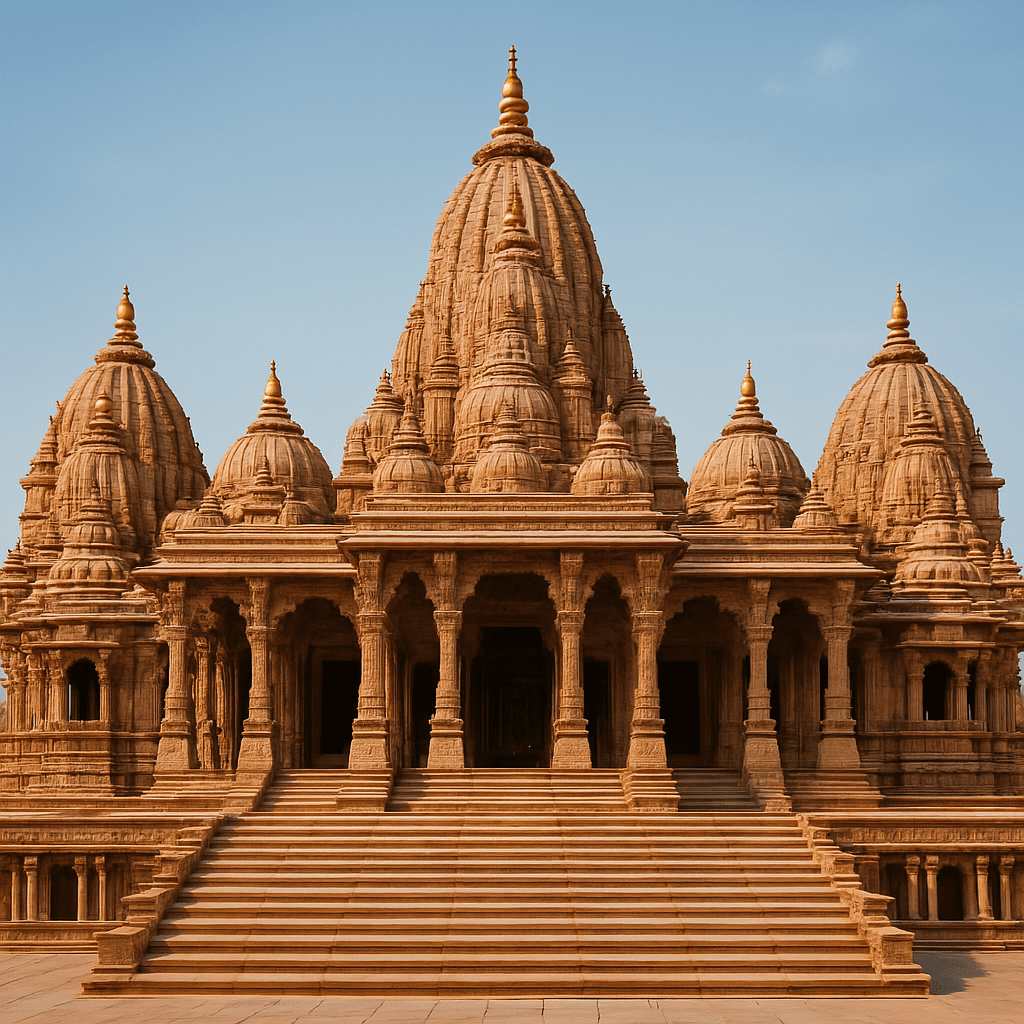
ISKCON Hare Krishna Dham Whitefield will house a 50,000 sq feet temple and cultural center spread across 7.6 acres, combining ancient and modern architecture with eco-friendly features including zero-waste management and rainwater harvesting. This will be a landmark spiritual destination for all of Bangalore and for devotees traveling from across India and the world.
The temple pond for boat festivals, the open-air theater for outdoor programs, and the lush green gardens will make this one of the most beautiful and complete spiritual spaces in South India.
You can be part of making this vision a reality. Every donation toward the temple construction directly supports a sacred space that will serve thousands of families for generations to come. This is an opportunity to participate in something far larger than any single act of worship.
Begin Your Journey Today
The Hare Krishna Maha Mantra has been chanted for thousands of years. It was carried across oceans by a determined teacher. It has taken root in the heart of Bangalore. And it is available to you, right now, exactly as you are.
Whether your entry point is curiosity, stress, a desire for peace, or a genuine spiritual seeking, the practice welcomes you at whatever stage you arrive. Come to a Kirtan. Join a Japa session. Attend a scriptural class. Explore a Bhakti centre near you. Support the programs that feed bodies and nourish souls.
The mantra is simple. The path is clear. The community is here.
Hare Krishna Hare Krishna, Krishna Krishna Hare Hare Hare Rama Hare Rama, Rama Rama Hare Hare
Frequently Asked Questions
Q1. What does Hare Krishna Hare Krishna mean?
It is a direct spiritual appeal to the Supreme Lord and His divine energy. The prayer translates roughly as: “O energy of the Lord, O all-attractive Lord, O source of all pleasure, please engage me in Your loving devotional service.”
Q2. Who can chant this mantra?
Anyone. There are no restrictions based on age, religion, caste, or background. The mantra is described in scripture as universal in its benefit and application.
Q3. Do I need to be formally initiated to begin chanting?
No. Formal initiation is a later step for those who wish to deepen their commitment. The chanting itself is open to all and can be begun immediately, without any prerequisite.
Q4. What is the best time to chant?
Any time is auspicious. However, the brahma-muhurta, approximately ninety minutes before sunrise, is traditionally considered the most spiritually powerful window for mantra meditation.
Q5. What is the difference between Japa and Kirtan?
Japa is personal and meditative, chanted softly on beads. Kirtan is collective and celebratory, sung aloud with musical instruments. Both are essential and complementary dimensions of the same practice.
Q6. How long before I notice a change?
Many people report a sense of calm and clarity after even a single sincere session of chanting. Deeper transformation unfolds over weeks and months of regular practice. Consistency matters far more than duration or intensity.
Q7. Is there a structured way to learn this practice?
Yes. ISKCON Whitefield offers Mantra Meditation courses and foundational programs like Bhakti Steps that guide new seekers systematically through the philosophy, practice, and progressive stages of the chanting path.